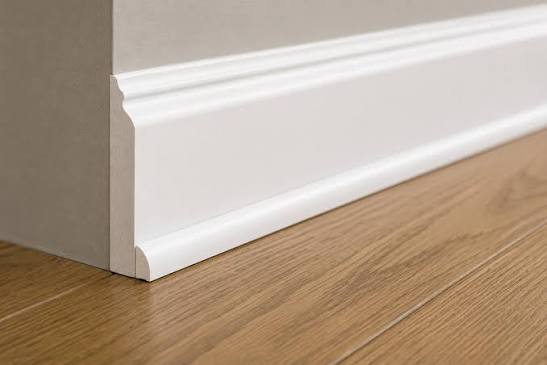
Finding the right trim to finish your floors can transform a home renovation from average to custom quality. Whether you are replacing water-damaged trim after a Texas flash flood, upgrading to higher-profile baseboards, or adding shoe molding to conceal gaps in new hardwood floors, finding quality wood materials locally in San Antonio makes all the difference.
Here is a quick-reference guide to the top suppliers, material comparisons, real-life project scenarios, and buying tips for wood baseboards and shoe molding in the Alamo City.
1. Where can you buy real wood baseboards and shoe mold in San Antonio?
San Antonio offers a mix of local specialty lumberyards, regional Texas distributors, and big-box home improvement stores. Each serves different project needs:
- Local Architectural & Specialty Lumberyards
- Pro Millwork & Trim Suppliers (e.g., Allen & Allen Co., Alamo Hardwoods): Best for high-end solid hardwoods (Oak, Maple, Walnut, Cherry), custom profile matching, and historic restorations in older neighborhoods like King William or Monte Vista.
- Commercial Trim Distributors (e.g., BMC / Builders FirstSource): Great for contractors and large DIY renovations buying finger-joint pine or primed wood trim in bulk.
- Big-Box Retailers
- The Home Depot & Lowe’s: Ideal for quick DIY pickups, standard 8 ft to 16 ft stock lengths in primed finger-joint pine, solid pine, or oak shoe mold.
- Floor & Decor: Offers competitive pricing on matching wood trim, quarter round, and shoe molding alongside flooring materials.
2. Real-World Example: A San Antonio Homeowner’s Trim Project
Scenario: Upgrading a 1980s Northside Home in Alamo Heights
- The Challenge: A homeowner replaced tired carpet with 3/4-inch solid white oak hardwood flooring. After installation, a 3/8-inch expansion gap remained between the bottom of the baseboards and the new floor, along with minor unevenness near the drywall.
- The Solution: Rather than removing and replacing all existing 5-1/4″ baseboards, the owner purchased 150 linear feet of solid pine shoe mold from a local lumberyard on San Pedro Ave.
- The Result: The flexible shoe mold conformed tightly to slight dips in the floor sub-structure, hiding the gap completely while matching the stain tone of the base trim. Buying locally allowed them to hand-pick straight, clear pieces without bowing or knot defects common in unvetted bulk racks.
3. MDF vs. Solid Wood vs. Primed Finger-Joint Pine: Which should you choose?
Choosing the right material depends on your budget, room humidity, and finish preference (paint vs. stain).
| Feature / Material | Solid Hardwood (Oak, Maple, Walnut) | Primed Finger-Joint Pine | MDF (Medium-Density Fiberboard) |
| Best Used For | Stained trim, luxury finishes | Painted trim, high-traffic rooms | Budget painted trim, low-moisture areas |
| Moisture Resistance | High (when properly sealed) | Moderate to High | Low (swells easily when wet) |
| Durability / Impact | Exceptional (resists dents) | Good resistance | Poor (dents/chips easily) |
| Price Point | $$$(Premium) \vert{}$$(Mid-Range) \vert{}$ (Budget) | ||
| Workability | Requires pre-drilling or trim nailer | Easy to nail, cut, and miter | Easy to cut, produces fine dust |
4. What is the difference between shoe molding and quarter round?

While often confused, shoe molding and quarter round have distinct profiles designed for different aesthetic and functional purposes:
- Shoe Mold (Base Shoe):
- Profile: Taller and narrower (typically 1/2″ wide by 3/4″ tall).
- Look: Sleek, subtle, and modern.
- Function: Fits tightly against baseboards without extending too far out onto the floor surface. Preferred by interior designers for clean lines.
- Quarter Round:
- Profile: Perfect quarter-circle radius (typically 3/4″ wide by 3/4″ tall).
- Look: Bulkier, traditional curved appearance.
- Function: Covers larger expansion gaps left by laminate, vinyl plank, or floating engineered floors.
5. How to measure and calculate how much baseboard and shoe mold to order
To avoid mid-project delays or unnecessary extra trips across I-35, follow this straightforward calculation process:
- Measure Room Perimeter: Measure the wall lengths in feet for every room needing trim.
- Deduct Doorways: Subtract the width of door openings (standard interior doors are 2.5 ft to 3 ft wide).
- Sum Total Linear Footage: Add all wall measurements together to get your base requirement.
- Add a 10%–15% Waste Factor: Multiply total linear feet by 1.10 for simple rectangular rooms, or 1.15 for rooms with many corners, miters, and cutoffs.
- Match Stock Lengths: Trim comes in standard lengths (8 ft, 12 ft, or 16 ft). Calculate cuts ahead of time to minimize joints along long walls.
6. Key steps for inspecting real wood trim before buying in-store
When buying real wood baseboards or shoe molding in person, take time to check for wood defects:
- Sight down the length: Place one end on the floor and look down the stick to check for bows, cups, or twists.
- Check for finger-joint separation: If buying primed pine, inspect joints along the piece to make sure they are flat and fully glued.
- Inspect grain patterns: For stained wood projects, select pieces with uniform color and consistent grain patterns.
- Check moisture levels: Avoid storing raw wood in damp outdoor yards right before indoor installation; allow trim to acclimate inside the home for 48–72 hours prior to cutting.
7. What tool setup do you need for installing wood baseboards and shoe mold?
Installing trim requires basic woodworking tools to achieve clean miter joints and seamless corner transitions:
- 10″ or 12″ Miter Saw: Essential for precise 45-degree angle cuts and coped joint angles.
- 18-Gauge Brad Nailer: Secures trim to wall studs without splitting thin shoe mold profiles.
- Copingsaw: Used for scribing inside corner joints so they stay tight even if walls aren’t perfectly 90 degrees.
- Wood Putty or Painter’s Caulk: Fills nail holes (putty for stained wood, acrylic caulk for painted trim).
- Pneumatic or Cordless Compressor Setup: Provides consistent driving power for flush nail heads.
Need help picking the perfect molding profile for your San Antonio home?
Bring your room measurements or a sample of your current trim to your nearest local millwork store today, or Contact Our Experts to get matched with the right wood grade for your project.