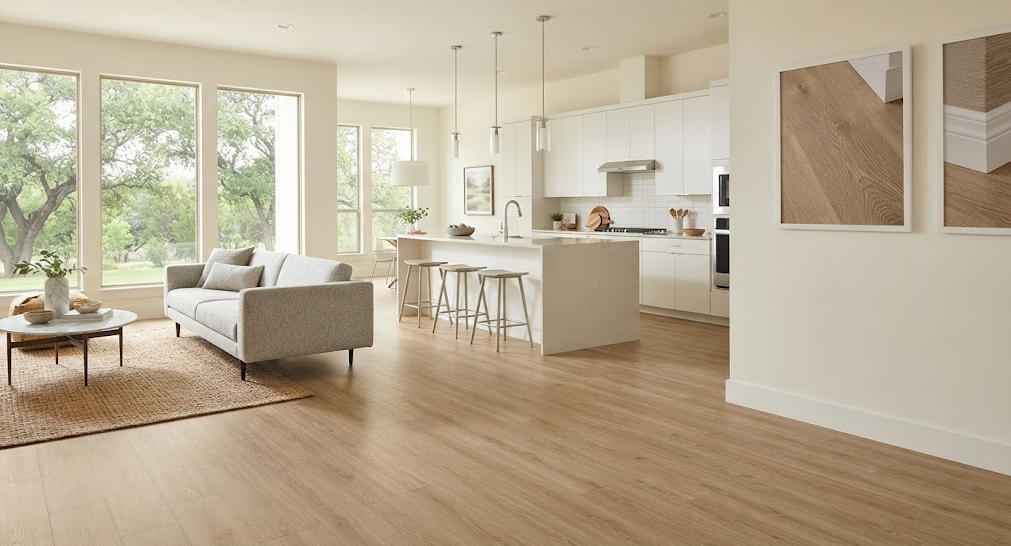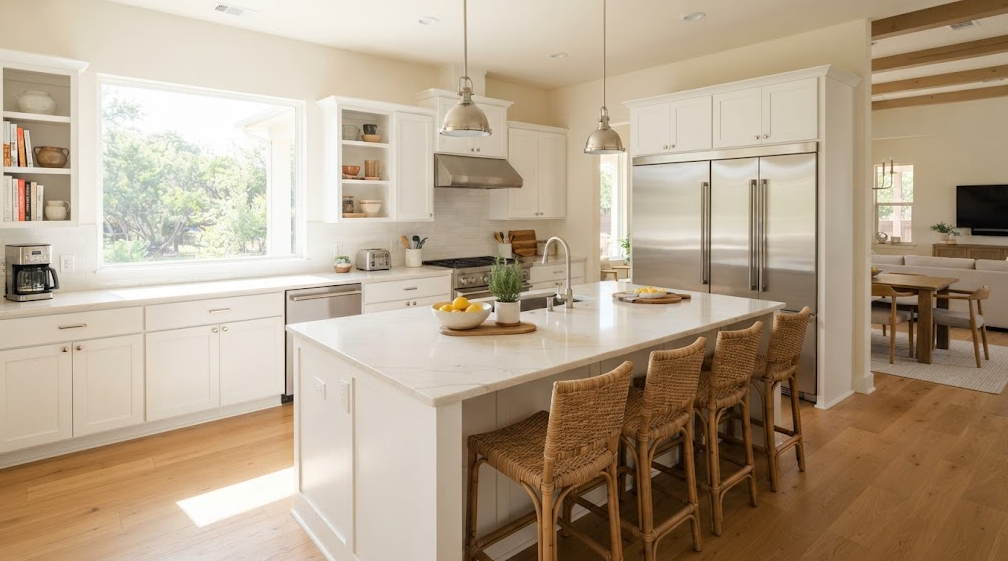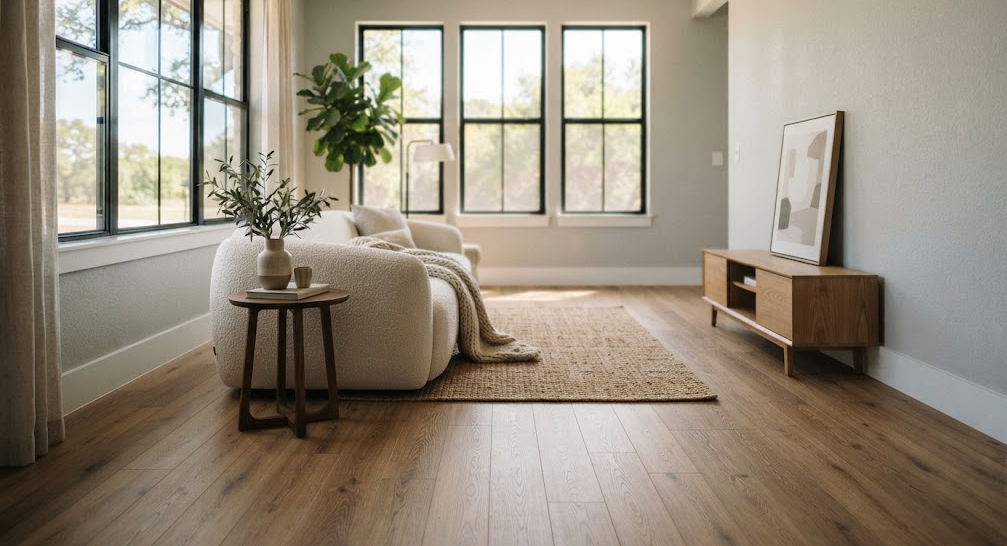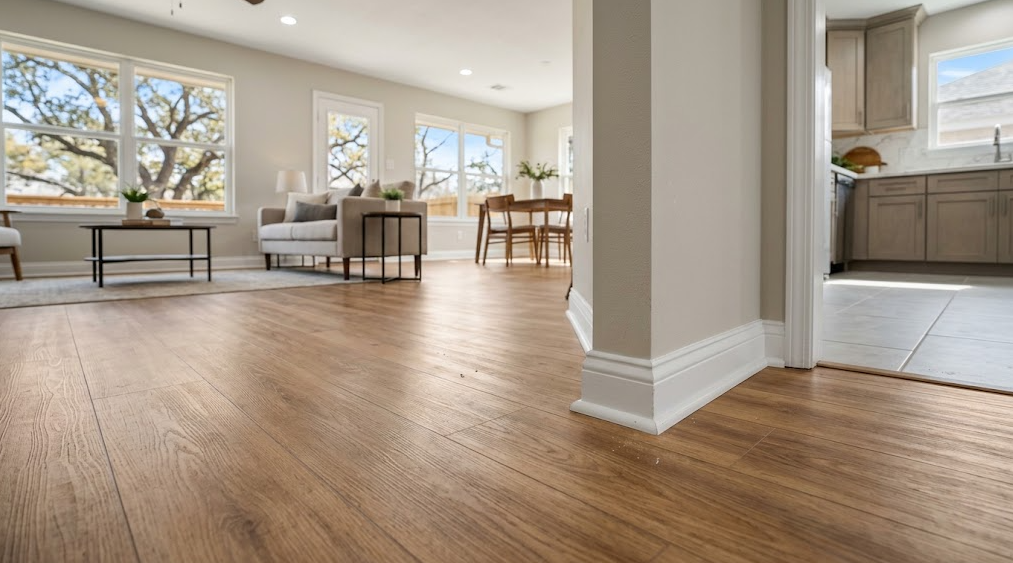
If you’re installing new luxury flooring in your San Antonio home, don’t let trim be an afterthought. The little strip of molding along your baseboards does real work – it hides gaps, protects your floor’s edges, and gives the whole room that finished, custom look.
A lot of homeowners get the flooring picked out, the color and plank width all figured out, then get stuck when it comes time to choose the trim. This guide walks you through shoe mold, quarter round, and the other edge details so you can finish your project with confidence.
Why Edge Trim Matters More Than You Think
Luxury vinyl plank, laminate, and engineered hardwood are all floating floors in most installations. That means the planks aren’t glued or nailed to the subfloor – they’re designed to expand and contract with Texas heat and humidity swings.
Installers leave a small gap, usually around a quarter inch, between the flooring and the wall. Without trim, that gap looks like a mistake. With the right molding, it looks intentional and pulls the whole room together.
What Shoe Mold Actually Does
Shoe mold (sometimes called base shoe) is a thin, flexible strip installed at the bottom of your baseboard, right where it meets the floor. Because it’s slim and pliable, it follows small dips and unevenness in the floor better than bulkier trim options.
It’s a popular pick for:
- Homes with taller, more formal baseboards
- Rooms where you want the baseboard itself to stay the visual focus
- Situations where the subfloor isn’t perfectly flat
Shoe Mold vs. Quarter Round: What’s the Difference?
Homeowners mix these two up constantly, and honestly, they solve the same basic problem. Here’s how they differ.
| Feature | Shoe Mold | Quarter Round |
| Profile | Thin, low curve | Thicker, rounder curve |
| Best for | Formal rooms, thin baseboards | Larger gaps, casual spaces |
| Flexibility | More flexible, hugs uneven floors | Slightly stiffer |
| Common look | Refined, higher-end | Builder-grade, standard |
| Typical cost | Comparable, sometimes slightly higher | Comparable, sometimes slightly lower |
Neither option is objectively “better.” It usually comes down to the size of your gap, your baseboard style, and personal taste. If your home already has one style installed in adjoining rooms, matching it keeps things consistent.
Other Trim and Transition Pieces to Know
Shoe mold isn’t the only trim you’ll run into. Depending on your layout, you may also need:
T-molding – Bridges two floor sections of similar height, like where luxury vinyl in the kitchen meets vinyl in the hallway.
Reducers – Create a smooth, sloped transition between your new luxury flooring and a lower surface, such as tile or existing hardwood.
End caps – Finish off a floor edge where it meets a different surface, like a fireplace hearth or sliding door track.
Stair nose – Covers and protects the edge of a stair tread where your flooring wraps onto steps.
Choosing Trim That Matches Your Luxury Flooring
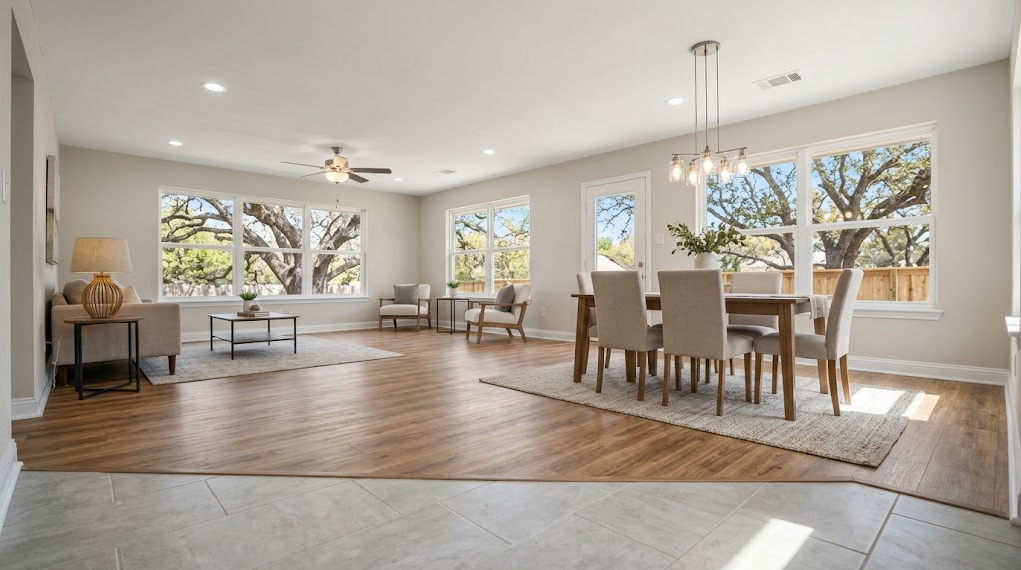
Color matching matters more with luxury vinyl and laminate than it did with older flooring types, since these products come in such a wide range of finishes – wood-look, stone-look, and everything between.
A few practical tips:
- Order trim from the same manufacturer as your flooring whenever possible for the closest color match.
- If exact matching isn’t available, choose a slightly darker shade rather than lighter – it tends to blend in better.
- Bring a flooring sample with you when shopping for trim in person, especially for warm-toned San Antonio homes with a lot of natural light.
- For open floor plans common in newer San Antonio builds, consistent trim throughout keeps sightlines clean from room to room.
Common Mistakes Homeowners Make With Edge Trim
Skipping it entirely. Without shoe mold or quarter round, the expansion gap is left exposed, and the floor has nowhere to move safely.
Nailing trim into the floor instead of the baseboard or wall. This restricts the floor’s ability to expand and can lead to buckling over time.
Mismatched sheen or tone. A trim piece that’s too glossy or too light next to a matte, dark-toned floor stands out for the wrong reasons.
Forgetting stairs and thresholds. These transition points get overlooked until installation day, which can delay a project.
Quick Checklist Before You Buy
- Confirm your baseboard height and gap size
- Decide between shoe mold and quarter round
- Match trim color/finish to your flooring
- Identify any doorway or level-change transitions
- Plan for stair nose if flooring continues to a staircase
- Order slightly extra material for waste and mistakes
Getting It Right the First Time
Trim looks simple, but small missteps – the wrong profile, a poor color match, nails driven into the wrong spot – end up being noticeable in a finished room. If you’d rather not guess, Home Improvement Warehouse helps San Antonio homeowners select and install luxury flooring and matching trim as part of one coordinated project, so every detail lines up from the subfloor to the baseboard. Reach out to our team for a consultation on your remodel.
Final Thoughts
Edge trim might be the last thing installed, but it’s often the first thing people notice about a well-finished floor. Whether you go with shoe mold or quarter round, matching your luxury flooring trim carefully and installing it correctly protects your investment and gives your San Antonio home that polished, custom feel.