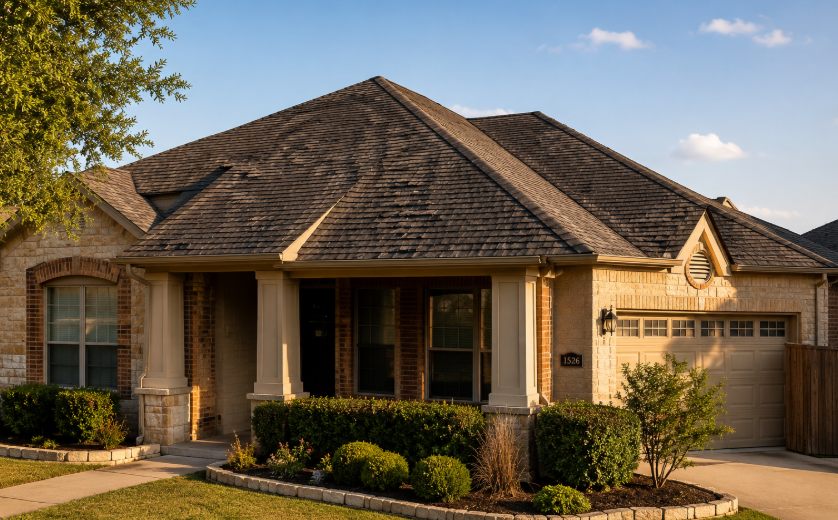
Nobody thinks about their roof until it gives them a reason to. Usually that reason is a stain spreading across the ceiling, or a shingle sitting in the front yard after a windy night. By then, San Antonio’s summers and hailstorms have already been working on that roof for years.
Roofs don’t just quit one day. They tell you first, usually in small ways that are easy to walk right past if you don’t know what you’re looking for.
Here’s what to actually check, why it matters, and where the line is between “call someone next week” and “call someone today.”
So How Long Do Shingles Really Last?
Somewhere in the 20-to-25-year range for standard asphalt shingles, give or take. Architectural shingles tend to hold up a little longer.
That number shrinks fast in this climate, though. San Antonio doesn’t do your roof any favors the sun bakes it all summer, and every so often hail shows up to speed things along. A roof rated for 25 years elsewhere might start showing its age here well before that.
Not sure how old yours is? Pull your home inspection report if you have one, or just ask a roofer to check when they’re out there. It won’t tell you everything, but it’s a decent starting point.
The Checklist: 8 Things Worth Checking
Start outside, work your way in, and finish in the attic if you can get up there safely.
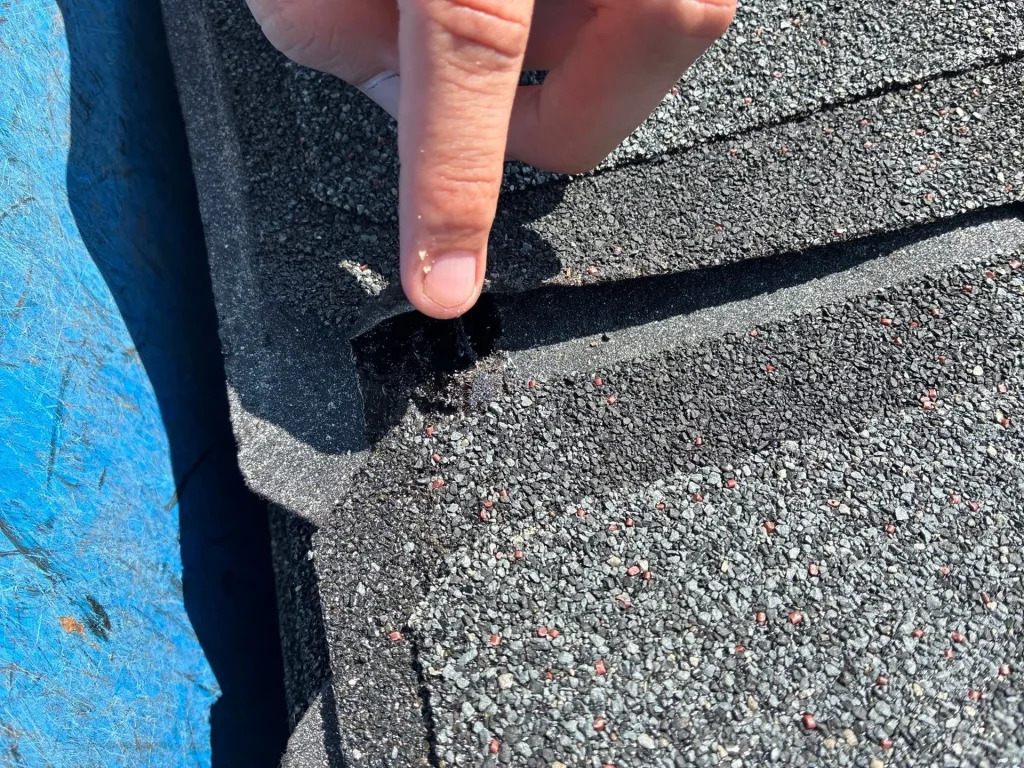
- Shingles curling at the edges or cracked down the middle. This usually means they’ve dried out and can’t shed water the way they’re supposed too anymore.
- Shingles that are just gone. After a storm, a missing shingle isn’t only ugly it’s a straight shot for water to get under everything else.
- Granules piling up in your gutters. A few is nothing. A steady buildup, or bald patches you can actually see on the shingles, means that protective layer is wearing thin.
- Stains on the ceiling or upper walls. Brown or yellow rings almost always mean water got in somewhere, even if there’s no active drip right now.
- Light coming through the attic roof deck. Go up on a sunny afternoon and look up. Any daylight leaking through is a problem, full stop.
- A roofline that dips or sags. This one’s usually about moisture damage to the decking underneath, sometimes worse. Don’t sit on this.
- Cooling bills creeping up for no obvious reason. Roofs that have lost their insulating value let conditioned air slip out, and your AC picks up the slack.
- Half the block getting new roofs. If your neighborhood went up around the same time and you’re seeing crews everywhere, it’s worth finding out if you’re next.
Repair or Replace? A Quick Comparison
| Situation | Repair Usually Works | Replacement Is Likely Needed |
| Damage location | Isolated to one small area | Spread across multiple sections or slopes |
| Roof age | Under 15 years | Approaching or past 20-25 years |
| Shingle condition | A few missing or cracked shingles | Widespread curling, cracking, or granule loss |
| Leak history | First-time or single leak | Recurring leaks in different spots |
| Attic condition | Dry, no daylight visible | Water stains, daylight, or sagging decking |
Treat the table as a starting point, not a verdict. What’s actually going on with your specific roof is something a professional needs to look at in person.
Why San Antonio Is Rough on Roofs Specifically
Hill Country weather doesn’t do subtle. Shingles expand and contract through the summer heat, and that constant flexing wears them down faster than you’d expect. Then hail comes through every so often and bruises or cracks shingles in ways you can’t always spot from the ground. Heavy spring rain has a way of finding whatever weak spot was already there.
None of this means your roof is on borrowed time. It just means checking on it matters more here than it would somewhere with milder weather.
Where Homeowners Usually Go Wrong
Waiting for an active leak before making a call is the big one. So is assuming everything’s fine because the roof “looks okay” from the driveway a lot of the real damage doesn’t show from down there. Patching the same spot over and over instead of asking whether it’s time to just replace the thing is another common one. And the attic check gets skipped constantly, even though that’s often where the clearest evidence is.
If You’ve Checked Off Anything on This List
Even one or two of these is reason enough to get a roofer out there before it turns into something bigger. An inspection will tell you whether you’re looking at a repair or a full replacement, and acting early is almost always the cheaper path.
HIW123 works with San Antonio homeowners on roofing along with cabinets, flooring, and full remodels, so if what starts as a roof problem turns into a bigger renovation conversation, that’s something we can help with too. Reach out for an inspection and a straight answer on where your roof actually stands.
Don’t Wait for the Leak
A roof gives you warning before it fails: curling shingles, granules in the gutter, a stain that wasn’t there last month, maybe a dip in the line you can see from the street. Catching it early is the whole game. If your San Antonio home is showing a few of these signs, you need a new roof; get someone out to look before the next storm decides for you.