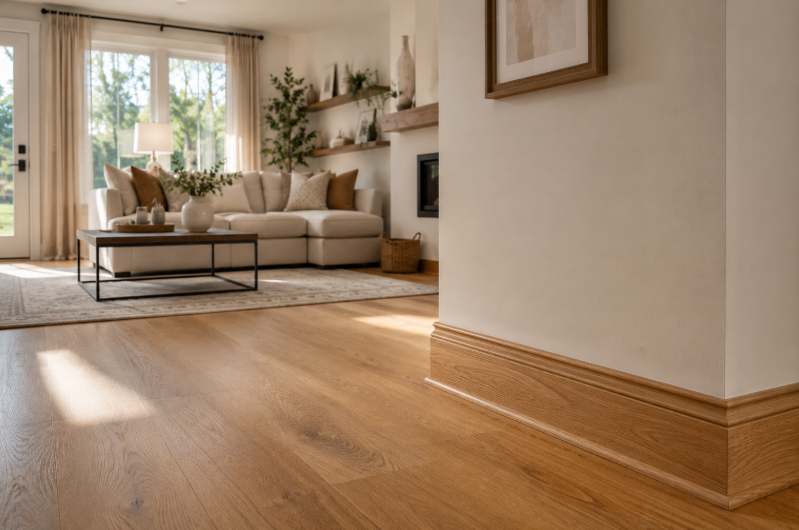
Upgrading the trim in your home is one of those details that quietly elevates every room. If you’re searching for wooden baseboards San Antonio homeowners actually use, you’re probably weighing material quality, style, and cost. Premium solid wood options bring durability and a finished look that painted MDF or basic profiles can’t quite match.
This guide covers the main types of wooden baseboards available, realistic current pricing, what drives the cost, and practical advice for San Antonio homes so you can choose with confidence.
Why Choose Wooden Baseboards?
Solid wood and quality wood-based trim hold up better in high-traffic areas, resist dents better than many composites, and can be stained or painted to match flooring or existing millwork. In San Antonio’s climate, properly sealed wood performs well indoors when moisture is controlled. Many homeowners prefer it for the natural grain and the ability to refinish years later if styles change.
Wooden baseboards also pair cleanly with hardwood, engineered wood, tile, or luxury vinyl plank floors especially when you add matching shoe molding (also called shoe mold) to cover expansion gaps.
Top Wooden Baseboard Options
Solid hardwood (oak, maple, poplar)
Oak is popular for its strength and pronounced grain. Maple offers a smoother, tighter grain. Poplar is a solid paint-grade choice that takes finish evenly. These are the premium picks for longevity and the ability to stain.
Finger-jointed pine or softwood
Shorter pieces joined together and often primed. More affordable than clear solid hardwood while still offering real wood performance. Common for paint-grade projects.
Higher profiles and custom milling
Taller baseboards (5–7 inches or more) or more detailed profiles (colonial, craftsman, modern flat) cost more per linear foot but create a stronger architectural presence, especially in homes with higher ceilings.
Many San Antonio suppliers also stock matching shoe molding and other trim pieces so the entire run looks cohesive.
Current Price Ranges for Wooden Baseboards
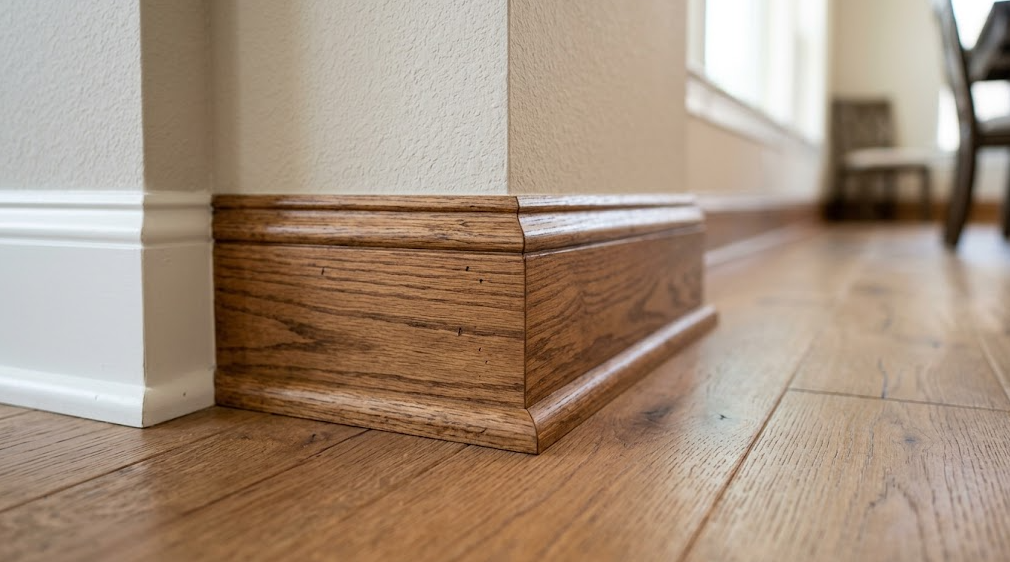
Material prices (sold by the linear foot) typically fall in these ranges, though exact numbers shift with grade, height, and current supply:
- Primed finger-joint pine or similar paint-grade wood: roughly $1–$3 per linear foot
- Solid pine: often $2–$4+
- Solid oak or similar hardwood (standard heights): commonly $2–$6 per linear foot
- Premium or taller profiles, maple, or specialty woods: $5–$12+ per linear foot
Installed costs (materials + professional labor) nationally average around $4.50–$12 per linear foot, with many projects landing near $5–$9 depending on complexity. Local San Antonio estimates for baseboard installation have been cited in ranges such as roughly $3–$7+ per linear foot including materials and labor, though full-room or whole-home totals vary widely.
A typical 12×12 room might need about 40–50 linear feet after accounting for doors. Whole-home projects scale accordingly. Always get current local quotes, as material costs and labor rates fluctuate.
What Affects the Final Cost?
- Height and profile -Taller or more detailed moldings use more material and take longer to cut and fit.
- Species and grade -Clear hardwood costs more than finger-jointed or paint-grade stock.
- Quantity -Buying in larger quantities for a full home often improves per-foot pricing.
- Installation details -Removal of old baseboards, uneven floors or walls, painting or staining, and adding shoe mold all add to the total.
- Finish work – pre-primed boards save time if painting; stain-grade wood requires more careful finishing.
Comparison of Common Options
| Material Type | Approx. Material Cost per LF | Best For | Key Trade-offs |
| Primed MDF | $0.50–$2 | Budget painted trim | Less durable, moisture sensitive |
| Finger-joint pine | $1–$3 | Affordable real-wood paint grade | Joints may show under some finishes |
| Solid oak / hardwood | $2–$6+ | Stainable, high-traffic, longevity | Higher cost |
| Premium/taller profiles | $4–$12+ | Statement rooms, custom look | Highest material & labor |
Practical Tips for San Antonio Homeowners
Measure every wall carefully and subtract door openings for an accurate linear-foot total. Bring samples home to check against your flooring and wall color in natural light. Consider moisture levels in bathrooms or near exterior doors seal wood properly or choose profiles that work with your flooring type. Matching shoe mold is often worth the small extra cost for a polished transition, especially with floating floors.
If you’re already updating cabinets, flooring, or countertops, coordinating the baseboard species or finish creates a more intentional result.
Common Mistakes to Avoid
Buying the cheapest option without checking durability for high-traffic zones. Skipping shoe mold when floors need an expansion gap. Ordering without verifying exact profile and height against existing trim in other rooms. Forgetting to factor in finishing (paint or stain) and installation labor when budgeting.
At Home Improvement Warehouse, we carry wood baseboards and shoe mold sold by the piece, along with other home improvement materials for San Antonio projects. Stop by or call (210) 824-1957 to check current stock, compare options in person, and get pricing for the quantities you need. Visit hiw123.com for more details.
Conclusion
Wooden baseboards San Antonio homeowners choose range from practical paint-grade pine to premium solid oak and custom profiles. Prices start affordably for basic real-wood stock and climb with species, height, and complexity. Focusing on the rooms that see the most use and matching the trim to your flooring and overall style usually delivers the best long-term satisfaction. Measure carefully, compare a few options side by side, and choose materials that fit both your budget and how you actually live in the house.